A Solo Woman Traveling uses human-written content that contains affiliate links and is a member of Amazon Services LLC. When you make a purchase on a link, we may receive a small commission. This is at no extra cost to you. See Our Affiliate Policy and Advertiser Disclosure for more info.
If you’re traveling to Europe, I bet you’re trying to figure out the best way to get the most data for the best price, right? There’s a lot of buzz about using an eSIM when you go abroad, but are they really worth it?
When you compare the cost of an eSIM to what your local carrier will charge you to use your phone overseas, the eSIM almost always wins. Way cheaper.
However, I must be completely honest, in my experience, setting up eSIMs can be a bit tricky. They’re a small bit of tech that can be annoying to set up if you struggle with this stuff like I do, but I still think they’re worth it.
I actually moved from the US to Europe full-time, so I had to test out all the options. That makes this review a little different than the average one you’ll find online.
So let this first-hand info help you decide if getting an eSIM when you land in Europe is the right move for you.

Jump to the Best eSIMs
👉 Click here to get straight to my comparison of popular eSims available.
What is an eSIM card?
An eSIM is basically a digital SIM card. It works like a regular SIM, but you don’t have to pop anything into your phone. You just download the data plan straight onto your device.
Most newer phones support eSIMs. Once it’s set up, it works like normal; you get calls, texts, data, all that. This is especially essential when traveling alone.
Simple idea. Setup might feel a little techy the first time, but don’t worry, I’ll walk you through it later.
My Favorite eSim
Saily is my go-to eSIM for most of my trips (SAVE 10% with code ASWT10). It was made by the same team behind NordVPN, so it’s not just fast and reliable.
It also comes with extras like a built-in VPN, ad blocker, and web protection. That means I can watch my usual shows wherever I am, and I don’t have to worry about sketchy public Wi-Fi at airports, hotels, or cafes.
The plans are flexible too, with options from 1GB to unlimited, so it’s easy to pick what you need without paying for stuff you won’t use.
Essentially, you have a separate phone number specifically for traveling. The number stays the same across every trip. You can use it solely for handling all of the traveling-related stuff.
You can use it for sign-ups, hotels, rental services, and local contacts while keeping your real number private. And avoid your usual number getting leaked or receiving spam messages.
There are some online platforms that are built around US number formats. Some won’t send 2FA codes to non-US numbers at all, so a +1 number simply unlocks more of the internet than a Lithuanian or Thai one.
Incoming SMS are free and unlimited even without a plan, so various verification codes will always reach you (without random charges).
Pros of Using an eSIM in Europe
The biggest win? Price. eSIMs are way cheaper than using your regular phone plan abroad. Your home carrier is probably gonna charge you something wild for roaming. With an eSIM, you can get local data plans that cost way less.
Setup is fast. You can scan a QR code or use an app and be connected in minutes. No hunting down a SIM card at the airport, no talking to anyone, no weird paperwork.
You can switch between plans without swapping SIM cards. This is perfect if you’re bouncing between countries or want to try a few providers.
And if your phone supports dual SIM, you can keep your regular number active while using the eSIM for data. So you won’t miss important stuff back home.
Cons of Using an eSIM in Europe
First thing, setup isn’t always smooth. Some apps are buggy. Some QR codes don’t work right away. And if you’re not super comfortable with tech stuff, it can get a little frustrating.
Not all eSIMs come with phone numbers. A lot of them are data-only, so you might not be able to make regular calls or send SMS texts unless you’re using apps like WhatsApp or iMessage.
Customer support can be hit or miss. Since a lot of eSIM companies are app-based or run totally online, getting help if something goes wrong can take a minute.
Also, if your phone isn’t unlocked or doesn’t support eSIM, you’re out of luck. Not all devices are ready for it, especially older ones.
Last thing, once you activate some eSIMs, you can’t get a refund. So if you mess up the install or pick the wrong plan, that money’s probably gone.
Quick Look: eSIM Pros and Cons
| Pros | Cons |
|---|---|
| Cheaper than roaming with your home plan | Setup can be buggy or confusing for first-timers |
| Easy to buy and activate (QR code or app) | Some plans are data-only, no phone number |
| No need to find or swap physical SIM cards | Customer support isn’t always great |
| Works well for country-hopping | Not all phones support eSIM or are unlocked |
| Can keep your regular number (dual SIM) | Some plans are non-refundable after activation |
Not All eSIMs Are Created Equal
Just because two eSIMs cost the same doesn’t mean they’re the same. Some have better coverage, faster speeds, or way better apps. Others look cheap but end up being annoying or full of hidden limits.
Some eSIMs only work in one country. Others cover all of Europe. Some let you hotspot. While some don’t. Some have good customer support. Others will ghost you when you need help.
So don’t just go for the lowest price. Pay attention to what the plan actually gives you. The fine print matters more than it should.
Best eSIMs for Europe (Ranked)
1. Saily
- Coverage: 200+ countries
- Hotspot: Yes
- App Experience: Super easy, clean UI
- Price Range: $5 to $50 (SAVE 10% with code ASWT10)
- Approx. Price per 10GB: $19
- User Rating: ★★★★★ (4.7 on Trustpilot)
- Best For: All-around best pick

2. Airalo
- Coverage: Europe-wide
- Hotspot: Yes
- App Experience: Easy to use
- Price Range: $5 to $20
- Approx. Price per 10GB: $18
- User Rating: ★★★★☆ (4.5 on Google Play)
- Best For: Short trips and budget-friendly plans

3. Nomad
- Coverage: Europe-wide / 200+ destinations
- Hotspot: Yes, supports tethering
- App Experience: Basic but solid — easy to track data and manage plans
- Price Range: ~$5 for 1GB, up to ~$24 for 10GB
- Approx. Price per 10GB: ~$24
- User Rating: ★★★★☆ (4.4 on Trustpilot)
- Best For: Travelers who want flexibility, solid coverage, and hotspot support

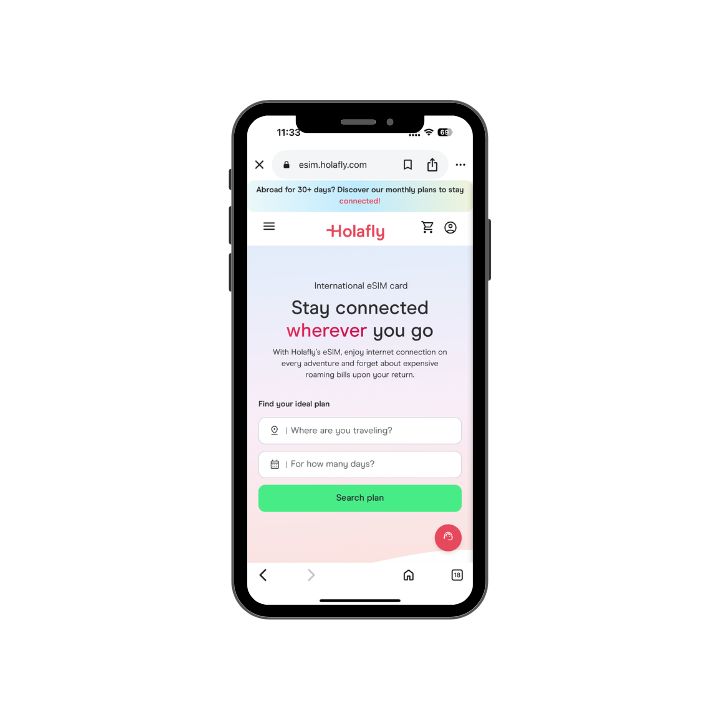
4. Holafly
- Coverage: Europe-wide
- Hotspot: No (on some plans)
- App Experience: Decent
- Price Range: $19 to $64 (unlimited data plans)
- Approx. Price per 10GB: Not applicable (unlimited)
- User Rating: ★★★★☆ (4.5 on Trustpilot)
- Best For: Unlimited data (but no hotspot)
Tips for Installing Your eSIM
Installing an eSIM isn’t hard, but it’s not something you want to figure out while you’re jetlagged at the airport. Here’s what I’ve learned from doing this a few times:
- Set it up before your trip. You don’t have to activate the data right away, but get it installed while you still have Wi-Fi and access to support if something goes wrong.
- Make sure your phone is unlocked and supports eSIMs. Not all phones do. If your phone is locked to a carrier, most eSIMs won’t work.
- Have a backup plan. Keep your regular SIM active if you’re using dual SIM mode, or make sure you know how to switch back if something doesn’t work.
- Don’t delete the email or QR code. You might need it again. Some apps also let you reinstall, but not all.
Follow the setup instructions exactly. Each provider is a little different. Some use QR codes, others do it through an app. Just go step-by-step. - You’ll probably need Wi-Fi to install it. So don’t wait until you’re in the middle of nowhere.
Once it’s set up, you’re good to go. The hardest part is usually just the first time.
How eSIMs Compare to U.S. Carrier Travel Plans
Before you buy an eSIM, it helps to know what your current phone plan would charge you to use your data in Europe.
Here’s a quick breakdown of what the major U.S. carriers offer for international travel:
| Carrier | Travel Option | Cost | What’s Included |
| Verizon | TravelPass | $10 per day | Use your regular plan abroad with your usual data, calls, and texts |
| AT&T | International Day Pass | $10 per day | Same as your home plan, capped at $100 per billing cycle |
| T-Mobile (Magenta plans) | Built-in | Free 5GB of high-speed data and unlimited slow data in over 200 countries | |
| Sprint (now part of T-Mobile) | Same as T-Mobile | Included in some plans | Similar benefits to T-Mobile, depending on your plan |
If you’re with Verizon or AT&T, using your phone in Europe could cost you $70 to $100 for just a week. That’s where eSIMs start to make a lot more sense. You can usually get a data plan for under $30 total.
T-Mobile is a bit different. Some of their plans already include international data, so you might not need an eSIM at all. Just double-check your plan details before you travel.
As a T-Mobile user myself, I did pretty well with using my built-in coverage, but it will max out of high speed pretty quickly if you are using maps or trying to watch Netflix on your phone.
When You Might Want a Local SIM Instead
eSIMs are super convenient, but they’re not always the best option. If you’re staying in one country for a longer trip, like a month or more, a local SIM might give you way more data for way less money.
Local carriers sometimes have deals you can’t get online. Think unlimited data, local phone numbers, and better speeds. You might have to show your passport or walk into a shop, but if you’re planning to stay put for a while, it could be worth it.
Also, if your phone doesn’t support eSIM or it’s locked to your home carrier, you’ll need a physical SIM anyway.
If you’re moving around fast and want something simple, go eSIM. But if you’re staying long or trying to save money, check out local SIMs once you land. Just a quick Google search will get you a list of companies in the country you are visiting. Vodafone is a very popular company in most European cities.
Final Thoughts: Are eSIMs Worth It in Europe?
Yep, in most cases, eSIMs are 100 percent worth it for Europe.
They’re cheaper than using your regular U.S. plan, way easier than hunting down a SIM card when you land, and they work in multiple countries without needing to swap anything. For most travelers, the convenience alone is a win.
If you’ve got a phone that supports eSIMs and you’re not on a plan like T-Mobile that already gives you free data, getting an eSIM is kind of a no-brainer. Just install it before your trip, make sure you’re on Wi-Fi, and you’re set.
The only time I’d skip it is if you’re staying in one country for a long time and want to save every dollar, that’s when a local SIM might be better.
But for short trips, multi-country travel, or just wanting to stay connected with no stress, eSIMs are the way to go.
Still question questions? Contact me or check out the common FAQs below!
Stuff People Always Ask About eSIMs
Yep, eSIMs are generally safe. They’re built into your phone and use the same secure systems as regular SIMs. You can’t lose or clone them easily, which makes them more secure in some ways. As always, your privacy mostly depends on the provider you choose, stick with trusted ones like Saily or Airalo.
Yes, they do. Some eSIM providers offer U.S. data plans, which can be handy for short domestic trips or testing the tech before you travel. Just check that the plan includes the U.S. before you buy.
Totally. As long as your eSIM includes data, all your usual apps like WhatsApp, iMessage, FaceTime, Instagram, whatever, will work just fine. You don’t need a phone number for most of them.
Only if the eSIM includes a phone number. Most are data-only, which means no regular calls or SMS. But you can still call and text using apps like WhatsApp, FaceTime, or Signal.
Yes, if your phone supports dual SIM. You can keep your regular number active and use the eSIM for data while you’re abroad. That way, you don’t miss calls or texts back home.
Most eSIMs are one-time use, so if you delete it before activating, you might need to contact support for a new one. Some providers let you reinstall through their app, but it’s safer to keep the QR code or confirmation email saved until you’re sure it’s working.
Most newer iPhones and Androids do. If your phone is from 2020 or later, it probably supports eSIM. You can check in your settings or on the eSIM provider’s website for a full compatibility list.
Some do, some don’t. Saily and Airalo usually allow it, but Holafly doesn’t on some plans. If hotspotting is important to you, double-check before buying.
It depends on the plan. Some are based on time (like 7 days or 30 days), and others last until you use up all your data. The clock usually starts ticking once you activate it, not when you install it.
Some providers let you top up in the app, others make you buy a new one. Saily and Airalo are both pretty easy when it comes to adding more data.
My Best Travel Planning Resources
- 15 Traveling Planning Websites For The Savvy Traveler
- Is It Worth Using A Travel Agent?
- How to Fly Business For Less Than Economy
- 13 Must-Have Travel Apps For Solo Females
- Are eSims Worth it in Europe?
- How to Get Free Travel Using Credit Cards
- How to Plan a Multi-City Trip to Europe
- Customized Travel Itineraries
- How to Travel For Free Not As An Influencer
- Best Travel Apps For Greece
- Essential Travel Apps for Travel To Portugal
- 30+ Chat GPT Prompts for Travel Planning
- Should You Use Astrology for Trip Planning?
- Which Capital One Card Is Better for Travelers
- Fora Travel Agency: Is It Legit?